Recently, there’s been a rise in popularity of high-adrenaline spectator sports such as Formula 1, but one such sport has only seen the same popularity within a particularly niche community: sailing, specifically the Summer Olympic Sailing events and Sail Grand Prix. The goal of Sail GP is to make sailing more accessible to local communities, but 50 foot super yachts aren’t the easiest boats to start sailing. That’s where our site comes in!
We want to give the average user a basic understanding of a really complex topic that has a lot of moving parts. By showing users how sailing has expanded a competitive sport, rather than just a leisurely hobby, through the interactive visualization of Olympic Sailing teams over time, we invite people to join a growing community.
While there are plenty of resources available online to get people started, many are jargon-heavy and don’t allow users to easily relate definitions to visual examples. That’s where our experience differs: we use layman’s terms to describe complicated maneuvers and interactive elements for users to mentally connect terms and their explanations to better retain information before actually taking to the seas.
Sailing has been included in the Summer Olympics since 1896 (though those events, specifically, were cancelled due to weather) and have continued to grow as an event. At the 2024 Paris Olympics, there will be over 40 different sailing events with hundreds of competitors. Interested to see how sailing has grown as a sport over time? Use the slider below to see the changes in how many countries send a team and how many sailors each team has. The most from any team was 59 sailors from Norway in 1920.
Number of People Sent to The Olympics
Please note: in order to provide the best bird's eye view of the distribution of Olympic Sailing teams over time, a somewhat simplified map is utilized. Unfortunately, this means some nations are not represnted, most of these being island nations such as Aruba and Barbados. Additionally, the Olympics records nations as the team name they competed under, some of which have become obsolete through history, such as the Soviet Union and Czechoslovakia. Through data cleaning, we've done our best to properly attribute the number of competitors to the modern country they represent.
Mouse over each gray part of the boat to learn that part's name and function! If you get lost, the part you're currently on will be highlighted in yellow.
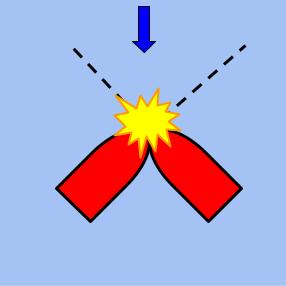
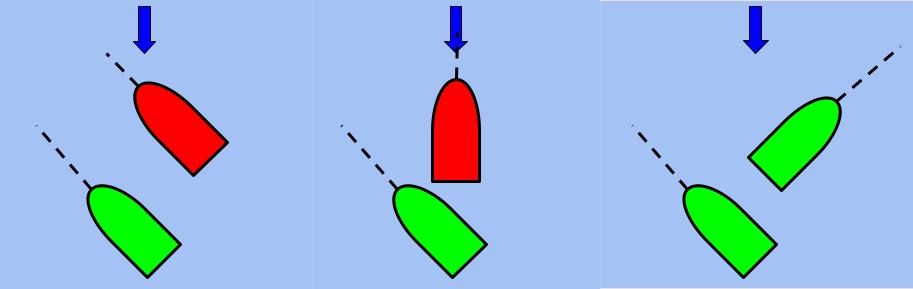
Assume the wind is coming from the top of the page and moving down.
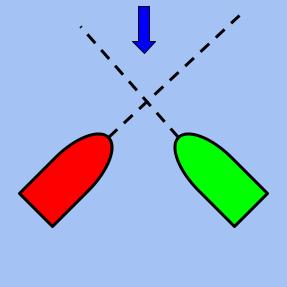
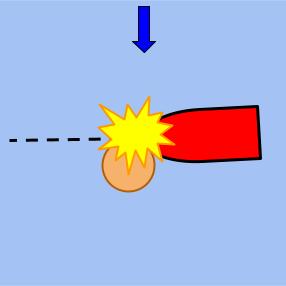
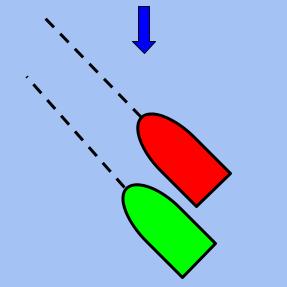
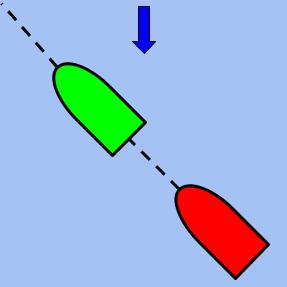
Read a brief description of the rules below, then drag the rule label to the corresponding diagram. The green boat is the boat that is not breaking a rule and the red boat is breaking a rule. The dropbox will outline in red if you are incorrect and green if you are correct. In each image, the blue arrow indicates the wind direction, the black dash line indicates the boat's course, and the orange circle indicates a mark/buoy.
Rule Descriptions: